

Waste Management & Diversion Services in Los Angeles, CA
Copia Resources operates across our full range of Copia Resources services, from waste bill audits and stream analysis to compactor optimization and tenant education. We focus on earning your business month after month: that accountability shapes how we approach every property.
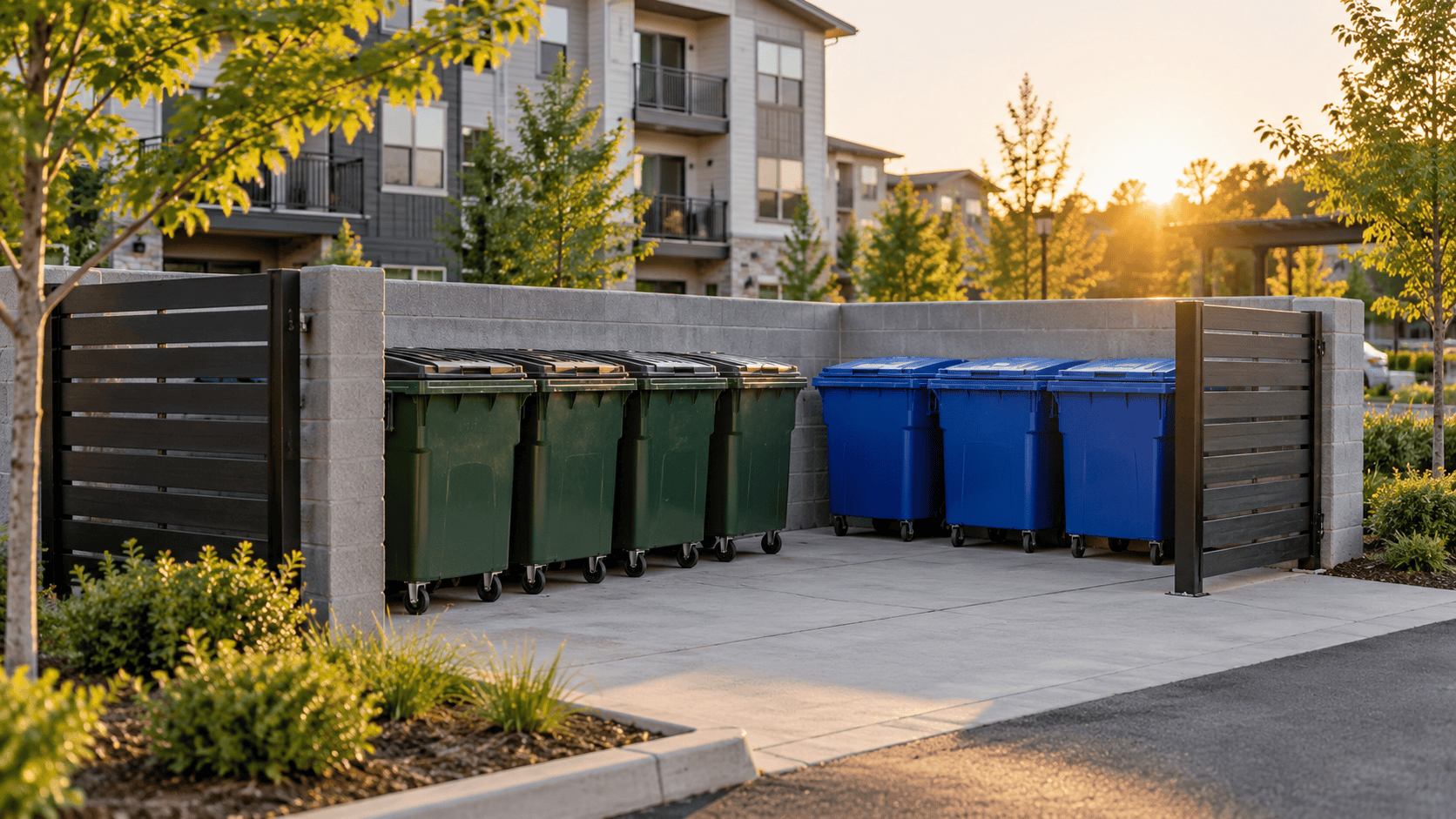
Independent Advocacy: We profit by reducing your waste costs, not by hauling larger bins. There is no conflict of interest in our recommendations.
Month-to-Month Flexibility: No restrictive long-term contracts. If our work stops delivering value, you are free to walk away.
On-Site Operational Support: Our team physically sorts streams, power washes enclosures, and remediates odors to protect your property’s curb appeal and tenant retention.
Schedule an independent waste assessment to evaluate your refuse, recycling, and organic waste streams. For high-volume properties managing compactor areas, ask about our compactor bin services as part of your initial consultation.
Cost-Effective Waste Diversion Strategies for LA Businesses
Waste Bill Audits and Service Right-Sizing
Commercial properties frequently overpay for hauling because collection schedules are set at contract signing and rarely revisited. Bins get picked up half-empty, ancillary fees accumulate without scrutiny, and service levels drift out of alignment with actual waste generation. A waste bill audit is a risk-free starting point: Copia analyzes three to six months of historical invoices to identify overcharges, mismatched service levels, and fees that can be challenged or eliminated, without requiring you to switch haulers.
The Role of Professional Waste Assessments
A waste assessment is a systematic review of your building’s operations designed to identify the quantity and composition of materials in your waste stream, as defined by the EPA’s guide to managing waste in commercial buildings. You cannot right-size a service you have never measured. Assessments give facility managers the data they need to negotiate appropriate hauling contracts, implement targeted recycling and composting programs, and document compliance for municipal inspections.
Facility managers who understand their specific waste profiles can eliminate unnecessary hauling costs and redirect recyclables and organics away from landfill disposal. To improve waste diversion rates, the process starts with knowing exactly what is leaving your property and in what volumes.
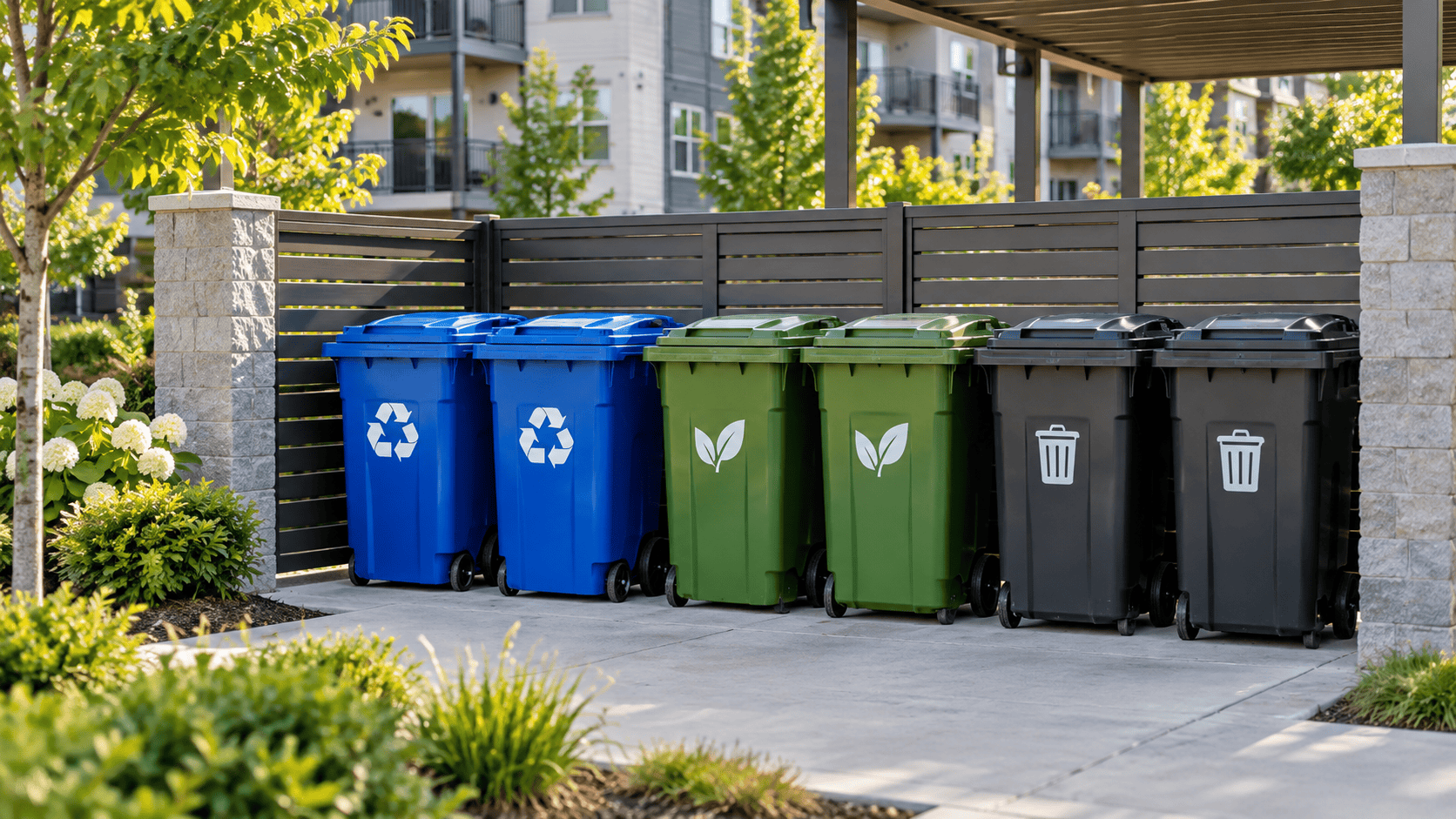
Structured Commercial Waste Assessment Process
Systematic Data Collection and Invoice Review
Copia begins every engagement by pulling at least three to six months of hauling invoices, mapping container capacities against collection frequencies, and flagging ancillary charges, pushout fees, overage charges, and contamination penalties that are often applied without justification. This invoice baseline establishes the measurable starting point against which all future cost reductions are tracked.
On-Site Waste Stream and Infrastructure Analysis
Our team conducts a physical walk-through of the property. We evaluate refuse enclosures, compactor areas, and internal collection points for bottlenecks, contamination risks, and safety hazards. We then perform a hands-on sorting analysis of representative waste samples to determine the actual ratio of refuse, recyclables, and organic materials moving through your system.
Tailored Optimization and Compliance Roadmap
From the data collected, Copia develops a tailored site solution covering recommended changes to container sizes, pickup schedules, and stream segregation setups. The plan includes ROI projections showing estimated monthly savings and outlines employee and tenant training programs to support adoption of new sorting protocols.
- Phase One: Invoice and Service Audit: We systematically review historical billing data to identify overcharges and establish a cost baseline.
- Phase Two: On-Site Stream Analysis: Our team conducts a physical walk-through and waste stream analysis to identify material composition, following the systematic methodology outlined by the US Environmental Protection Agency.
- Phase Three: Right-Sizing Implementation: We adjust bin capacities and collection frequencies to match actual volume, reducing monthly expenses immediately.
Tailored Site Solutions for Property Managers and Retailers
Addressing Multi-Family Operational Headaches
Multi-family properties face a specific set of pressures: refuse chutes that back up during peak periods, bulk items left in enclosures between scheduled pickups, and odors that migrate to common areas and affect tenant satisfaction. When waste systems are poorly managed, the degradation in curb appeal is visible to prospective tenants before they ever enter the building. Copia’s on-site refuse management handles the physical sorting, enclosure cleaning, and bulk item coordination that property maintenance teams rarely have bandwidth to manage consistently.
Managing High-Volume Retail Refuse Streams
Retail centers generate high volumes of cardboard, packaging waste, and food scraps, often across dozens of tenants with inconsistent sorting habits. Front-of-house contamination is a persistent risk: a single improperly sorted load can trigger municipal penalties and hauler rejection fees. Copia designs stream segregation systems and provides tenant-facing education to protect common area aesthetics and keep recycling loads clean enough to be accepted at local processing facilities.
Copia approaches each property as its own operational problem. Physical layout, tenant mix, and daily traffic patterns all shape what a functional waste system looks like, and we build plans that integrate into existing operations without causing downtime or disruption.
- Property Management Waste Solutions: Tailored valet trash and refuse removal systems that eliminate tenant complaints and maximize curb appeal for multi-family and commercial properties.
- Commercial & Retail Refuse Management: Detailed waste bill audits and service right-sizing to eliminate hauling overcharges across retail and office properties.
- Compactor and Bin Support: On-site refuse management and compactor optimization for high-volume properties.
Navigating California Recycling Laws and Mandates
Mandatory Commercial Recycling Under AB 341
California’s Assembly Bill 341 requires any business generating four or more cubic yards of commercial solid waste per week to arrange for recycling services, and multi-family residential properties with five or more units carry the same obligation. Non-compliance exposes property owners to enforcement actions, warning letters, and fines, and the thresholds are low enough that most commercial properties in Los Angeles are covered, according to CalRecycle’s commercial recycling program.
Organic Waste Diversion Requirements:
State-level organic waste mandates require a 75% reduction in organic waste landfill disposal by 2025, a target that directly affects commercial kitchens, grocery operations, and multi-family properties with significant food waste volumes. The LA County Zero Waste Program tracks compliance with these requirements as part of its broader diversion framework. Copia’s compost sorting and organic diversion programs give properties the on-site infrastructure to meet these mandates and document compliance during inspections.
Staying current with California’s shifting regulatory landscape is a full-time task that most property managers cannot absorb on top of their operational responsibilities. Copia monitors these standards, maintains the documentation needed to demonstrate compliance, and provides the on-site infrastructure to back it up. For multi-family and commercial operators who need a structured compliance plan, our waste solutions for property managers outline the specific steps for each property type.
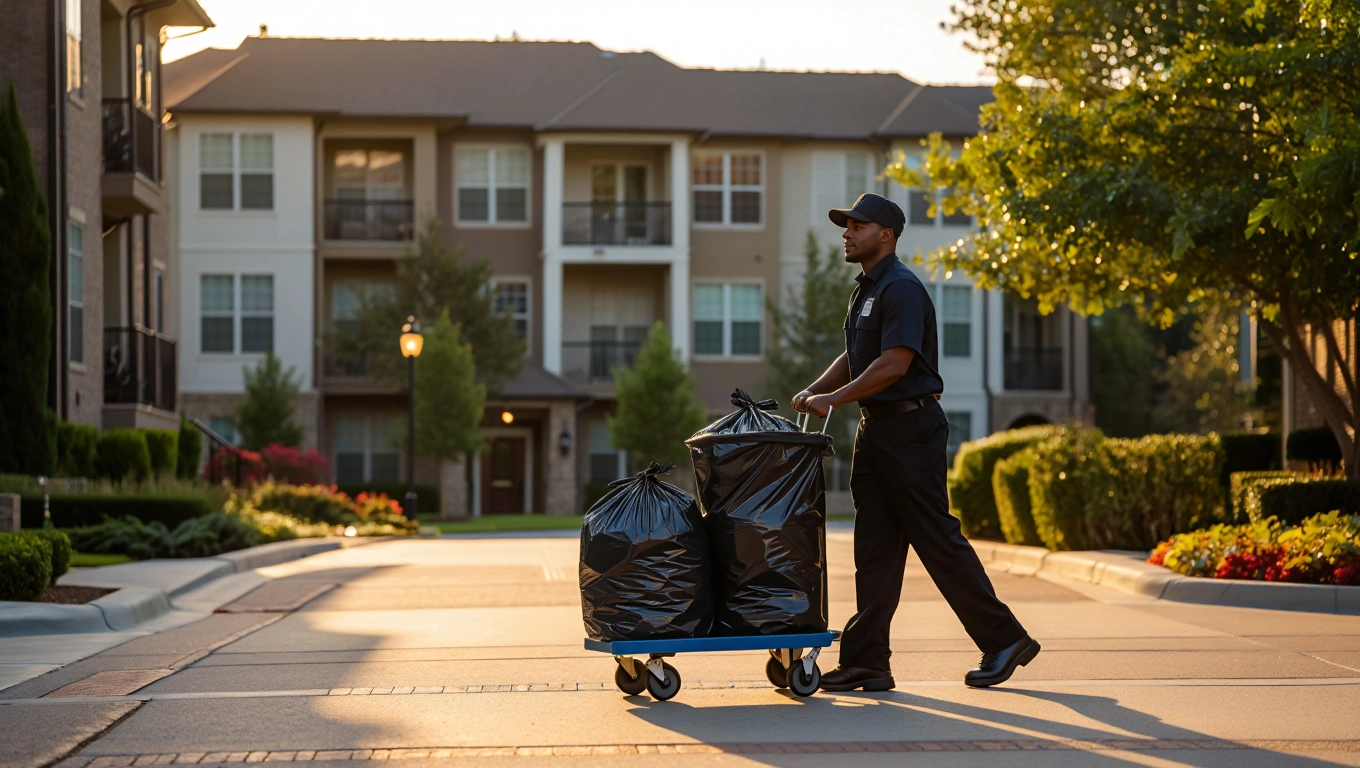
Key Compliance Thresholds for Los Angeles Properties
Front-of-House Container Mandates Under AB 827
Assembly Bill 827 requires businesses covered under AB 341 to provide clearly marked, visible, and easily accessible recycling and organics containers at the front-of-house for customer-consumed products. This applies directly to retail and food service environments where customer sorting behavior determines whether a recycling load is accepted or rejected at the processing facility. Preventing contamination in these bins requires consistent bin placement, clear labeling, and periodic monitoring, not just signage.
Regional Diversion Targets and Municipal Enforcement
The Los Angeles County Zero Waste Plan sets aggressive benchmarks: 80% waste diversion from landfills by 2025, 90% by 2035, and over 95% by 2045. Assembly Bill 939 independently requires all California cities and counties to maintain a minimum 50% landfill diversion rate. Local municipalities enforce these targets through audits, warning letters, and fines, and commercial properties are among the primary enforcement targets given their waste volumes.
- Assembly Bill 341: Mandates commercial recycling for businesses generating 4+ cubic yards of solid waste weekly and multi-family sites with 5+ units (CalRecycle’s commercial recycling program).
- Assembly Bill 827: Requires customer-accessible, clearly labeled recycling and organics bins at the front-of-house for businesses subject to AB 341 (CalRecycle’s commercial recycling program).
- Assembly Bill 939: Requires LA jurisdictions to maintain a minimum 50% landfill diversion rate (LA County Zero Waste Program).
- LA County Zero Waste Plan: Targets an 80% waste diversion rate from landfills by 2025, scaling to over 95% by 2045 (LA County Zero Waste Program).
The Operational Impact of Exclusive Waste Franchises in LA
Understanding the 11-Zone Franchise Model
The City of Los Angeles proposed a City-Wide Exclusive Franchise System for Municipal Solid Waste Collection and Handling that divides commercial waste collection into 11 distinct zones, assigning a single exclusive franchised hauler to each zone. The intent is to guarantee recycling access for all commercial establishments, but the structure eliminates open-market competition, as detailed in the CEQA Draft Environmental Impact Report for the franchise system. Businesses cannot select a different hauler based on price or service quality; their zone determines their provider.
The Crucial Need for an Independent Advocate
Franchised haulers operating with exclusive rights have limited structural incentive to actively right-size your service levels. Their revenue scales with bin size and pickup frequency, which creates a direct misalignment with your goal of reducing waste spend. They profit when you overpay. Copia works within the franchise framework as your independent advocate, auditing invoices, identifying overcharges, and building the documented case that compels your assigned hauler to adjust billing downward.
Navigating the 11-zone franchise system requires knowing the billing tendencies and service patterns of each zone’s assigned hauler. Copia’s team has built that local knowledge through direct engagement across multiple zones, which makes invoice audits more precise and service-level negotiations more effective. Understanding the full scope of California recycling laws, including how state mandates interact with the franchise zone structure, is essential context for any audit engagement.
A common misconception among businesses in exclusive zones is that their costs are fixed. Your hauler is fixed; your service levels are not. Copia’s waste bill audits identify where container sizes exceed actual generation and where pickup frequencies can be reduced, forcing a billing adjustment without requiring any change to your assigned hauler.
Environmental Stewardship and the Circular Economy in Southern California
Moving Toward a Circular Economy
Shifting away from linear “take-make-waste” disposal reduces the volume of organic material decomposing in landfills, which directly lowers methane and carbon dioxide emissions, greenhouse gases that the LA County Zero Waste Program identifies as a primary driver of the county’s diversion targets. For commercial properties, diversion programs also translate into measurable ESG metrics that satisfy investor reporting requirements and tenant sustainability expectations.
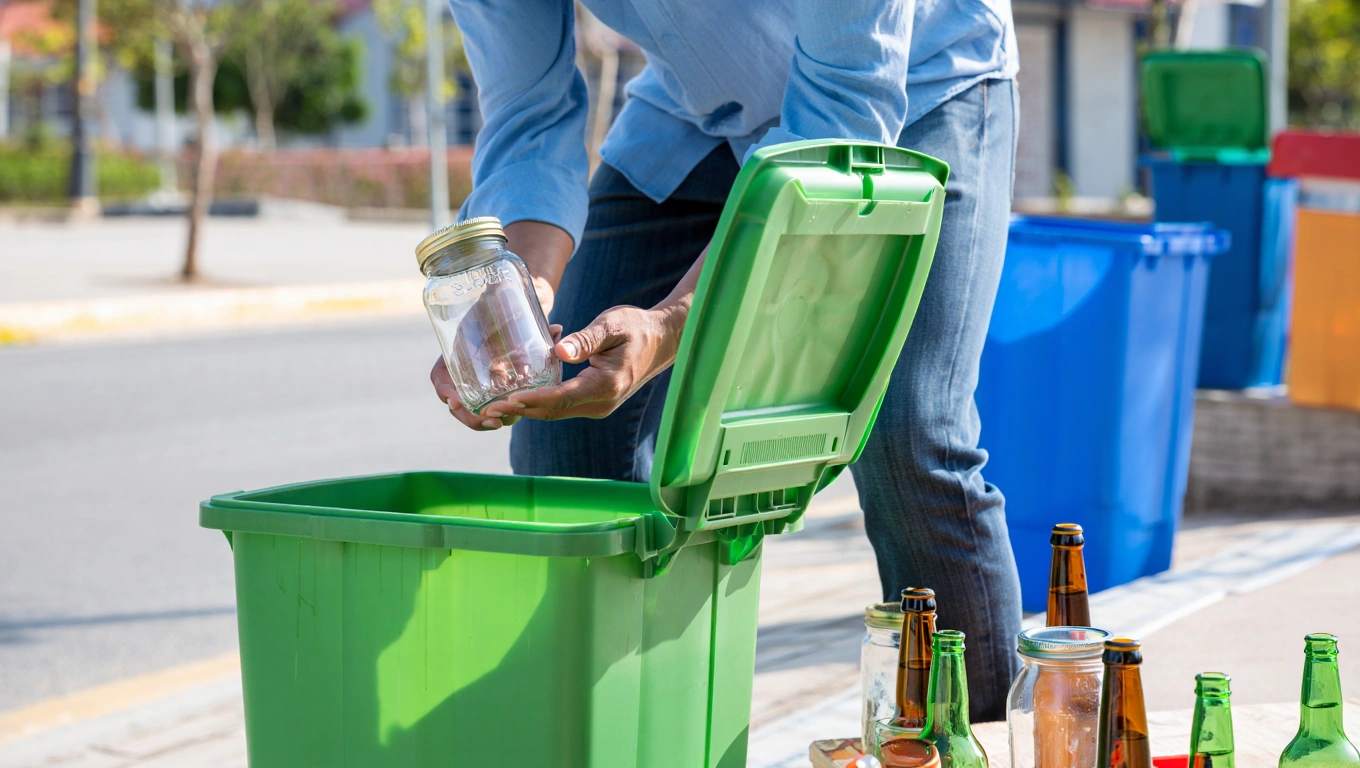
Tracking and Benchmarking Waste Metrics
Data-driven tracking is what separates a functional diversion program from one that looks good on paper. Tools like ENERGY STAR Portfolio Manager allow businesses to benchmark waste performance across their portfolio, while the EPA’s Waste Reduction Model (WARM) quantifies greenhouse gas reductions in terms that support corporate sustainability reporting. Copia builds these tracking frameworks into every engagement so clients can prove progress with verifiable numbers.
Properties that implement structured diversion programs attract eco-conscious tenants and customers who increasingly factor environmental performance into leasing and purchasing decisions. In Southern California’s competitive commercial real estate market, documented sustainability performance has become a baseline expectation for Class A and B properties.

Regional Infrastructure and Stormwater Diversion Initiatives
Integrating Solid Waste and Water Management
Los Angeles County has integrated waste diversion into its broader water management infrastructure. Fourteen stormwater-sewer diversion projects currently capture and divert 438,848 gallons of urban runoff per day into sanitary sewers for treatment and recycling, according to the EPA Water Reuse Case Study for Los Angeles County. Solid waste litter on commercial properties feeds directly into storm drains during rain events, making on-site refuse management a measurable contributor to coastal water quality.
Funding Sustainable Infrastructure via Measure W
These regional water recycling initiatives are funded by Measure W, a parcel tax generating approximately $300 million annually for the Safe Clean Water Program. Commercial properties both contribute to and benefit from this infrastructure: cleaner storm drains reduce flooding risk and support the county’s recycled water supply. On-site refuse management, including enclosure cleaning and litter abatement, is a practical component of keeping that infrastructure functional.
Keeping refuse enclosures clean and preventing runoff contamination from commercial properties is a direct contribution to Los Angeles’s water resilience goals. Our waste diversion and sorting guides cover the operational and compliance dimensions of this intersection in more detail, including how on-site practices connect to regional environmental requirements.
Overcoming Global Recycling Market Disruptions
The Impact of China’s National Sword Policy
China’s National Sword Policy established a 0.05% contamination standard for imported recyclable materials, effectively closing one of the largest export markets for mixed recyclables and forcing Los Angeles County to redirect resources toward upgrading local processing infrastructure. The downstream effect for commercial properties was direct: haulers began passing contamination rejection costs back to businesses through fines that accumulate quickly when sorting protocols are inconsistent.
Reducing Contamination at the Source
The only reliable defense against contamination fines is strict sorting at the property level, before haulers arrive. Copia’s on-site bin sorting and tenant education programs ensure that materials are properly segregated at the point of generation: cardboard separated from food waste, film plastic kept out of commingled recycling, and organics free of non-compostable contaminants. This hands-on approach protects the integrity of the recycling stream and reduces the risk of load rejection at local processing facilities.
Brenda Arevalo, Senior Sustainability Coordinator at Copia Resources, describes the operational impact of this work:
“A core memory that has made the biggest impact for me was getting hands-on with back-of-house sorting and seeing our team in action. Experiencing it firsthand gave me a whole new perspective on the work we do. It reminded me that sustainability isn’t just a goal; it’s something we build together, one step at a time. I’m truly grateful for the opportunity and for the company’s support in helping me learn and grow through real, hands-on experience.
I’m excited to keep learning and passing forward what I’ve gained with our amazing Sustainability team. It’s rewarding to work for a company that invests in both sustainability and its people.”
Copia’s team does the physical sorting work directly on your property, pulling contaminated items, remediating enclosures, and training staff on what goes where, so the streams that leave your site are clean enough to be processed.
Property managers and facility directors across Los Angeles regularly encounter the same operational and regulatory questions. The answers below address the ones that come up most often.
Frequently Asked Questions
Does the city of LA recycle, and how can businesses prevent contamination?
Yes, the City of Los Angeles has an active recycling program, but its effectiveness depends heavily on proper sorting. Businesses can prevent contamination and avoid heavy hauler fines by implementing Copia’s hands-on back-of-house sorting and providing clear, AB 827-compliant bin labeling for employees and customers.
What are five common items that cannot be recycled in Los Angeles commercial bins?
Five common items that generally cannot be recycled in curbside commercial bins include greasy pizza boxes, plastic bags (film plastic), broken glass, garden hoses, and Styrofoam. These items must be segregated to prevent entire loads from being rejected at local processing facilities.
Does California still pay for recycling through redemption programs?
Yes, California operates the CRV (California Redemption Value) program, which pays consumers and businesses a refund (typically 5 or 10 cents) when eligible beverage containers are returned to certified recycling centers.
How can businesses contact LA Sanitation for municipal services?
You can contact LA Sanitation & Environment by calling their 24-hour Customer Care Center at 1-800-773-2489 or by visiting their official website at lacitysan.org. Note that commercial properties are typically routed through franchised haulers under the RecycLA system.
What is the difference between Copia Resources and WM of Southern California?
WM of Southern California is a regional hauling utility that owns trucks and landfills, profiting from waste volume. Copia Resources is an independent operational consultant and on-site service provider. We do not haul waste; instead, we act as your advocate to audit bills, right-size your hauling contracts, and manage on-site sorting to reduce your overall waste spend.
Schedule an Assessment Today
Your property’s waste program is generating costs and compliance risks that a monthly invoice review will not surface on its own. Copia Resources conducts independent waste assessments and bill audits that identify exactly where you are overpaying and what operational changes will reduce that spend, with no long-term contract required.
To schedule an assessment or speak with a member of our team, call 877-937-2750. We earn your business month after month, and that commitment starts with the first conversation. For properties with high-volume, industrial, or specialized waste needs, contact us directly to discuss a customized operational plan tailored to your site’s specific streams and compliance obligations.