

Reasons Every Commercial Property Needs a Waste Management Consultant
Commercial property managers face a quiet drain on their operating budgets: waste management. Bins overflow, tenant complaints rise, and monthly hauling invoices arrive with unpredictable, escalating fees. Most operators presume their waste hauler is managing their program efficiently. This is a mistake. A waste hauler, however, is a transportation provider rather than an analyst. While haulers profit from moving larger volumes of waste more frequently, a waste management consultant works on behalf of the property owner to reduce waste at the source, audit invoices, and align vendor contracts with actual operational needs. Partnering with an independent consultant protects commercial budgets, maintains curb appeal, and simplifies complex municipal compliance.
The Operational Conflict of Interest: Waste Hauler vs. Waste Management Consultant
Distinguishing a waste hauler from a waste management consultant is more than a semantic exercise; it determines who is working in your financial interest. A waste hauler is a service provider contracted to physically transport and dispose of waste. A waste management consultant is an independent advisor who analyzes waste streams, identifies cost recapture opportunities, designs compliance strategies, and ensures vendor alignment. This distinction sits at the center of modern sustainable materials management, which moves beyond simple trash removal to a systematic review of building operations, waste tracking, and resource conservation, concepts detailed extensively in the EPA Commercial Waste Guide.
The structural conflict is plain. Haulers generate revenue from the volume and frequency of pickups. Larger containers, more frequent service, and higher tonnage all benefit the hauler’s bottom line. Asking that same hauler to design your waste program is asking them to recommend a solution that may cost you more than you need to spend. Consultants, by contrast, work on behalf of the property owner to reduce waste at the source, negotiate right-sized service contracts, and audit invoices to recapture overcharges. Commercial and institutional buildings, such as offices, hotels, and retail centers, generate significant amounts of waste. The EPA Commercial Waste Guide makes clear that measurement-driven management is essential for reducing disposal costs, streamlining stakeholder reporting, and lowering greenhouse gas emissions. When a property relies on its hauler to self-regulate service levels, that measurement-driven discipline rarely materializes.
There is also a subtler problem: haulers have no contractual obligation to flag when your service levels exceed your actual needs. A 6-yard dumpster serviced three times per week may have been appropriate for a building at full occupancy two years ago. If occupancy dropped or tenant mix changed, that schedule almost certainly did not adjust with it. You pay for empty space. A consultant audits those conditions continuously, treating the waste program as a living operational variable rather than a fixed line item.
Conducting a Systematic Waste Assessment to Uncover Savings
Among the most concrete reasons to hire a waste management consultant is access to a rigorous, data-driven waste assessment: a structured review of building operations that identifies the exact quantity and composition of materials moving through the waste stream. Without that baseline, property managers are negotiating blind. They cannot know whether their recycling stream is contaminated, whether valuable materials are being routed to landfill unnecessarily, or whether their container sizes and pickup frequencies reflect actual generation patterns. A professional waste stream analysis closes that information gap, giving property managers the specific data they need to challenge hauler invoices and restructure service agreements on defensible grounds.
Contamination is a notably expensive blind spot. When recyclables are mixed with general waste, or when non-recyclable materials end up in the recycling stream, properties face contamination surcharges and lose the diversion credit those materials would otherwise generate. Consultants identify exactly where in the building’s operations contamination originates, whether that is a specific tenant floor, a loading dock, or a food service area, and design targeted interventions to address it. The savings are not theoretical; they come from eliminating fees that should never have been charged and from recapturing materials that were generating disposal costs instead of diversion value.
- Implement waste prevention strategies, including reduction, reuse, and donating perishable food to local food banks, which eliminate waste at the source and save on storage and disposal costs.
- Utilize standardized platforms like ENERGY STAR Portfolio Manager to track waste, providing a baseline to negotiate hauling services that fit a building’s specific needs and preventing properties from paying for unneeded capacity (per the EPA Commercial Waste Guide).
- Deploy customized programs to improve waste diversion rates and ensure recyclables stay out of the landfill, and off your quarterly reports.
Is your property paying for empty space? Many commercial properties are locked into oversized container contracts and unnecessary pickup schedules. Take control of your operational expenses by scheduling a professional waste cost audit to uncover hidden billing errors and optimize your service levels.
Navigating Complex Municipal Rate Structures and Price Indices
Municipal waste programs can include franchise agreements, collection rates, and recycling incentives. San Jose, California, is one example of a city with a structured waste collection system. A consultant can help property managers understand which charges apply, evaluate service levels, and identify opportunities to reduce unnecessary costs without getting lost in technical regulatory details.EPA San Jose Waste Study
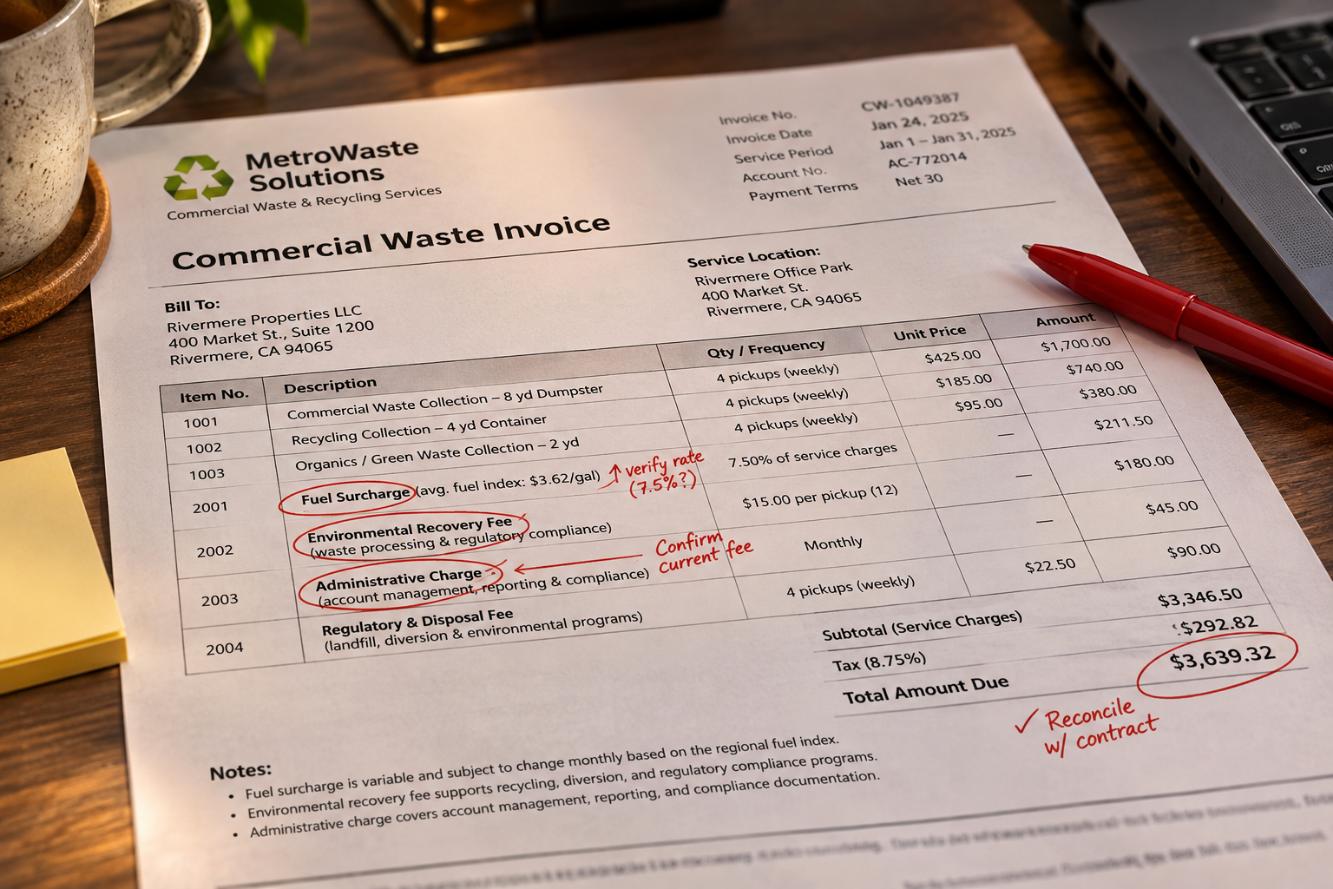
Contract rate adjustments add another layer of complexity. Some agreements include annual increases tied to pricing indices or other contract provisions, making careful invoice review important. When properties attempt to handle these contract adjustments internally, index calculation errors go undetected, and overcharges accumulate quietly across billing cycles. Utilizing professional property waste optimization ensures that collection schedules and contract terms are continuously evaluated against actual property needs, rather than renewed on autopilot when a contract anniversary arrives.property waste optimization
- Rate adjustment reviews help identify increases that do not match agreed contract terms.
- Volume-based service reviews help align collection costs with a property’s actual needs.
- Franchise agreement reviews help properties understand available service options and negotiate appropriate terms.
My six years here aren’t defined by one milestone, but by our journey together. From strategic board meetings to our legendary Christmas parties, the resilience and heart of this team make our mission meaningful. At Copia, where you begin is never where you end up, and I couldn’t be prouder of the relationships we’ve built along the way.”
Mitigating Regulatory Risks and Compliance Penalties
Waste and recycling requirements differ by jurisdiction and may affect sorting, organics collection, and documentation. A waste management consultant helps property teams understand applicable requirements and put practical procedures in place, rather than relying on haulers alone to manage on-site operations.
Internal property management teams are frequently stretched across too many competing priorities to maintain current knowledge of evolving municipal requirements. Waste diversion mandates, organic waste separation rules, and contamination thresholds change on legislative cycles that do not align with a property’s operational calendar. A consultant tracks those changes as a core professional function, updating compliance programs proactively rather than reactively. This prevents costly surprises. The difference between a property that receives a contamination citation and one that does not is usually not the quality of the hauler; it is whether someone with regulatory expertise reviewed the waste enclosure setup, tenant training materials, and signage before the inspection cycle began.
Don’t wait for a municipal inspector to flag your property. Partner with an expert team to design compliant waste programs that protect your budget and your reputation. Explore our waste consulting services to audit your current operations and build a risk-free compliance plan.
Regional Recycling and Waste Diversion Considerations
- California Organic Waste Requirements: State rules, including SB 1383, address organic waste diversion. Applicable responsibilities vary by property and local program.CalRecycle SB 1383 Portal
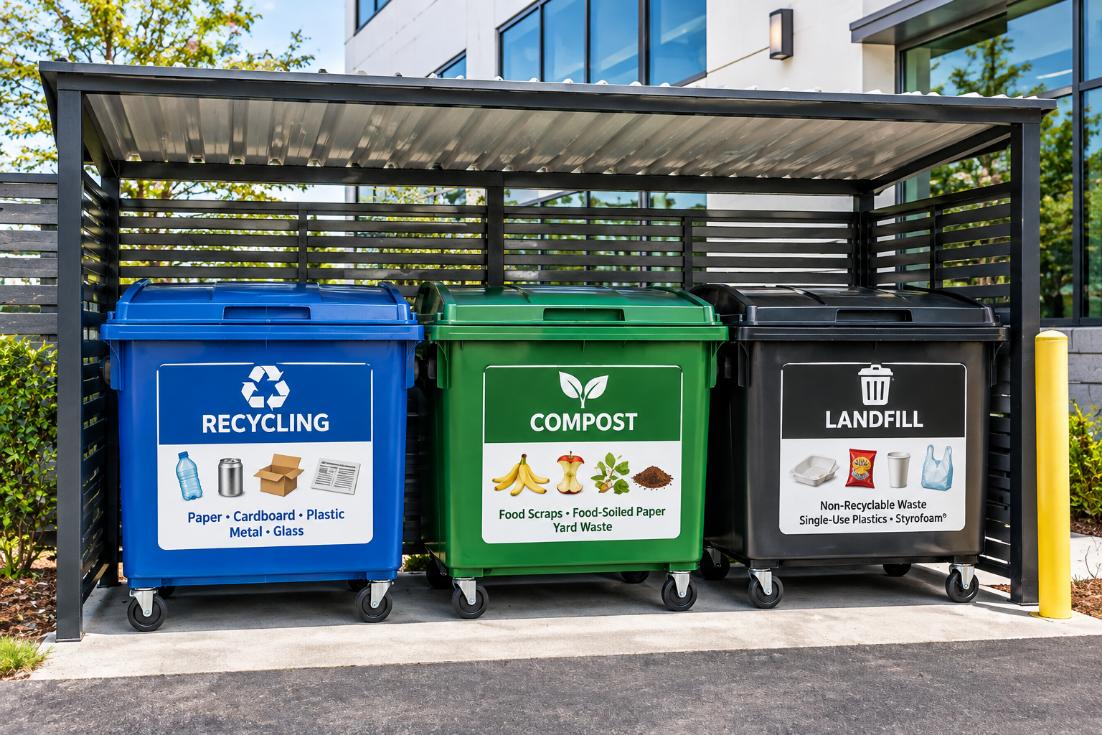
- Clear Sorting Systems: Local programs may provide guidance on labeled recycling, compost, and landfill containers to help businesses reduce contamination.
- Understanding applicable recycling guidance helps properties in Los Angeles, San Francisco, and other service areas organize effective waste programs.California recycling laws and mandates
Implementing and auditing complex, multi-district waste agreements and incentive payments requires substantial staffing and oversight, which can strain organizational resources. While some local governments and haulers offer free waste audits, disputes often persist regarding the accuracy of waste characterization studies and the fair application of annual contract adjustments linked to complex price indices (per the EPA San Jose Waste Study and the EPA Commercial Waste Guide). An independent consultant serves as an administrative shield, managing these disputes and verifying that all contract terms are applied fairly. They protect your interests. That independence matters: a hauler-provided audit has an inherent ceiling on how aggressively it will identify overcharges, because the hauler is both the auditor and the party being audited. A third-party consultant carries no such constraint.
Frequently Asked Questions About Commercial Waste Consulting
What is a waste consultant?
A waste consultant is an expert who analyzes an organization’s waste streams, helps implement sustainable disposal strategies, ensures regulatory compliance, and identifies ways to reduce operational costs and environmental impact. Unlike haulers, consultants do not own trucks and have no financial interest in how much waste you discard.
What are the environmental benefits of waste management?
Proper waste management reduces pollution, conserves natural resources by promoting recycling, saves energy, and lowers greenhouse gas emissions by diverting organic matter from landfills. These practices help commercial properties improve their ESG reporting metrics and overall sustainability profiles.
What is the biggest problem with waste management?
The biggest challenge is the rising volume of waste, particularly single-use plastics, combined with high rates of contamination in recycling streams and the environmental impact of landfills that are reaching maximum capacity. Consultants address this by designing clear signage and training programs to minimize contamination at the source.
How do waste consultants handle hauler-imposed contamination and overage fees?
Consultants audit invoices to identify unauthorized fees and negotiate contract terms that limit a hauler’s ability to apply arbitrary penalties. For properties seeking hands-on support, Copia Resources offers on-site waste management and back-of-house sorting to keep enclosures organized and prevent these fees entirely. To learn more about common industry challenges, browse our waste management guides.
Are waste consulting services expensive for commercial properties?
Professional waste consulting is designed to be a self-funding operational strategy. By identifying billing errors, right-sizing container capacities, and optimizing pickup schedules, the cost savings uncovered by a consultant typically exceed the cost of their services, delivering a direct return on investment.
Contact Us Today
Managing commercial waste does not have to be a source of unpredictable expenses and operational headaches. You can regain control. By partnering with an independent consultant, commercial property managers can transition from reactive trash removal to an active, optimized waste strategy. This partnership protects property budgets, ensures compliance with strict local regulations, and maintains the high curb appeal that tenants and visitors expect. Copia Resources builds relationships on accountability and practical expertise, offering tailored site waste solutions and a month-to-month commitment rather than locking clients into rigid, multi-year agreements. Our team acts as the bridge between properties and haulers, maximizing curb appeal and ensuring your waste systems are designed for efficiency and long-term success.
Ready to optimize your property’s waste operations and eliminate unpredictable hauler fees? Contact Copia Resources today at 877-937-2750 or explore our full suite of commercial waste services to design a customized operational plan for your facility.